
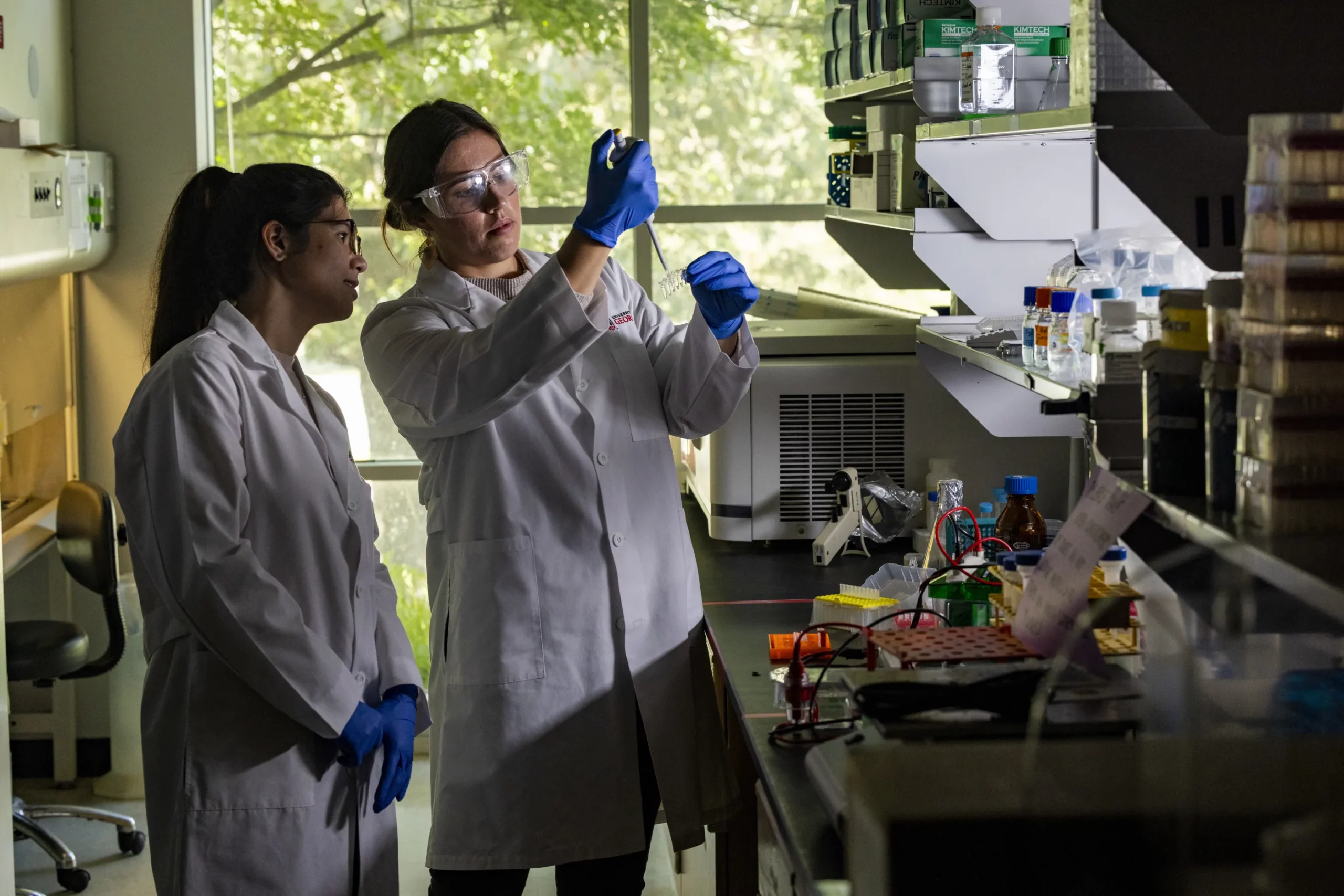
“Our goal in science is ‘complete knowledge.’ Imagine what we could do if we truly understood how organisms work.”
C. Robin Buell — Georgia Research Alliance Eminent Scholar Chair in Crop Genomics
David Bertioli and Soraya Leal-Bertioli are building on decades of peanut research with $6 million in support from the Gates Foundation and Mars Inc. Their work focuses on the genetic diversity found in wild peanut species, which holds traits that can strengthen modern crops.
By transferring these traits into cultivated peanuts, the team is helping improve resistance to disease, drought tolerance, and overall plant health. Their research will support the development of more resilient peanut varieties and help safeguard a key global food source for the future.
The Fight Against Fungal Infections
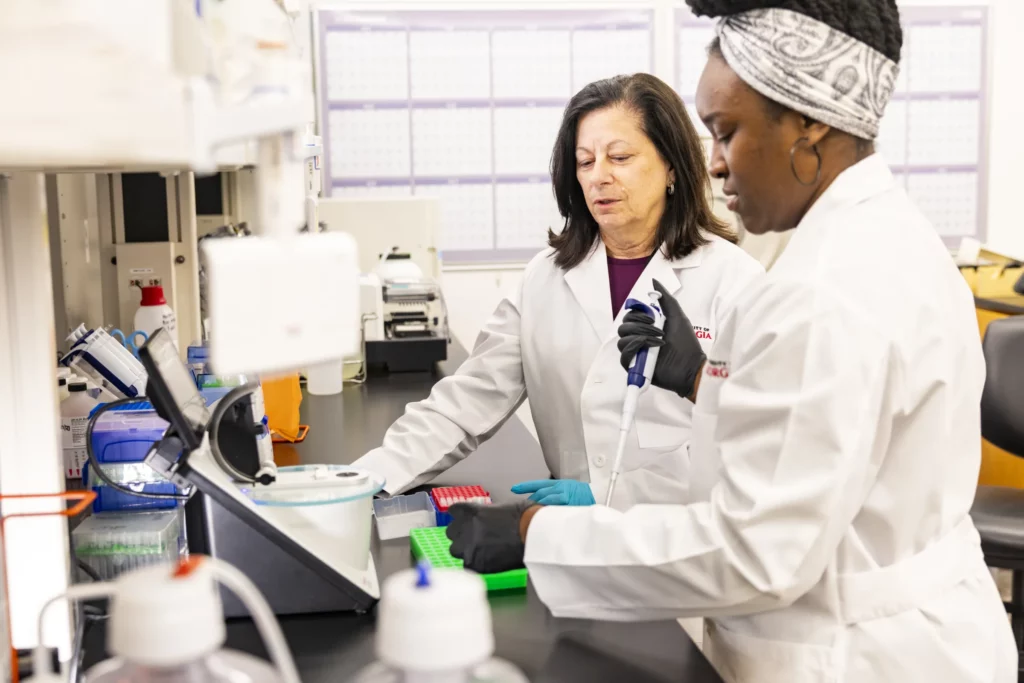
For patients with weakened immune systems, even a common fungal infection can become life-threatening. That’s the driving force behind Georgia Research Alliance Eminent Scholar Karen Norris’ research. Her work centers on a first-of-its-kind pan-fungal vaccine designed to prevent and treat multiple infections. In the battle against this growing global health challenge, Norris and her collaborators are redefining how we respond to life-threatening conditions.
Mini Organs, Major Impact
Some of the biggest names in biomedical research rely on data from the smallest creations. Organoids are three-dimensional “mini organs” that simulate human biology. Yana Zavros, director of the School of Medicine’s research center, and National Academy of Inventors Senior Member Nadja Zeltner use them to expand the boundaries of personalized medicine, drug discovery, and regenerative therapies.
Zavros, UGA’s inaugural Georgia Research Alliance Eminent Scholar in Molecular Medicine, develops organoids from patient tumor tissue to study how cancer develops and interacts with the immune system. Her work has led to a targeted therapy for pancreatic cancer that is now in phase 2 clinical trials.
Zeltner, based in the Center for Molecular Medicine, uses adrenal gland organoids to investigate disease and advance research in human cell generation. Her team has developed a new way to study heart disease by integrating nerve and heart cells to create a lab-grown cardiac model that can beat on its own.
NASA Collaborates with UGA
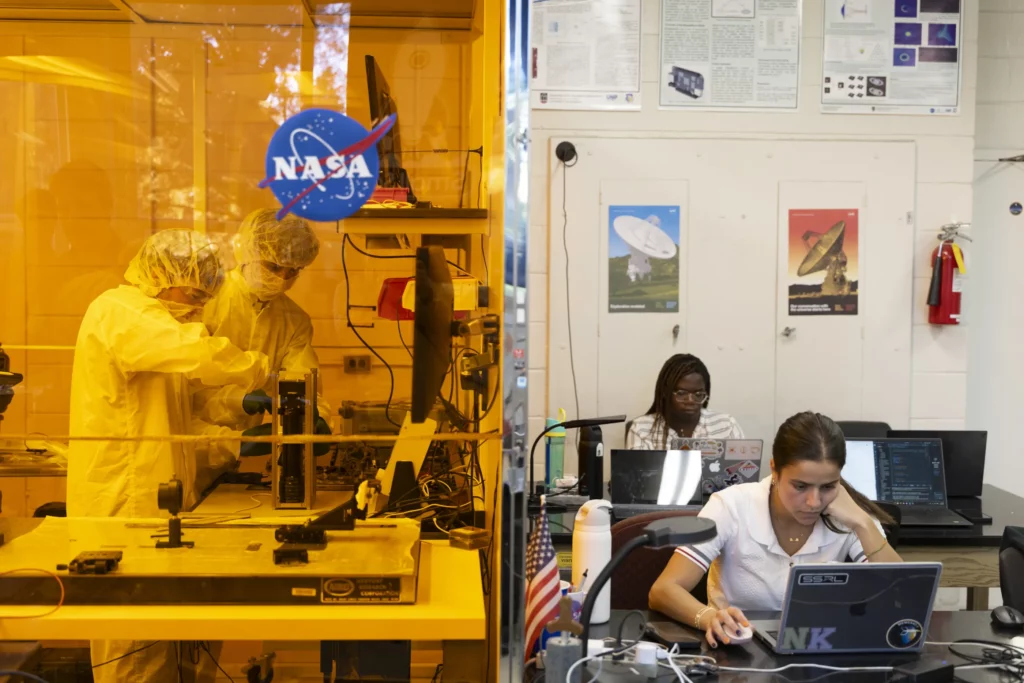
Memory foam. The treadmill. Smoke detectors. Many everyday innovations can trace their roots to NASA research. Now, the UGA Entrepreneurship Program is collaborating with NASA’s Technology Transfer University initiative to explore how far students can take NASA-developed technology.
Students learn about technology licensing and engage in creative problem-solving while developing solutions to real-world challenges. One recent project is a sensor to direct patients experiencing stroke and head trauma to appropriate hospitals quickly. Another is a high-accuracy location system for automated manufacturing environments.
10 Years of Innovation Gateway
For a decade, Innovation Gateway has served as UGA’s engine driving discovery to innovative products. Faculty, students, entrepreneurs, and industry partners work together to turn bold ideas into solutions that resonate far beyond campus.
At the heart of this journey are the researchers. Faculty innovators have developed new approaches to water purification, animal health, plant breeding, and biomedical therapies, to name just a few. Their work generates new technologies, startups, and licensed products that address global challenges and promote economic development.
As Innovation Gateway enters its second decade, it stands as a testament to what is possible when innovators are supported at every stage of their journey. Over the next 10 years, researchers at UGA will continue to turn curiosity into meaningful change for society.
Seeds of Knowledge
The University of Georgia’s Institute for Artificial Intelligence awarded seed grants to eight interdisciplinary research teams to advance projects that apply AI to real-world challenges.
Funded by the Office of the Provost and the Office of Research, the grants bring together experts in computing, medicine, social science, engineering, and agriculture to develop solutions ranging from improved emergency training and mental health diagnostics to sustainable poultry production and disease-resistant crops.
Academy Members
In 2026, marine scientist Samantha Joye was elected to the National Academy of Engineering, one of the highest honors for engineers and scientists. Joye led the charge to survey the petroleum industry’s largest marine oil spill in 2010, resulting in a wave of research that has elevated solutions for marine pollution for decades. Gerald Hart and Robert Schmitz were also elected to the National Academy of Sciences thanks to their dedication to improving lives. Hart’s research in cellular function and disease, along with Schmitz’s work in plant genetics, are driving new discoveries in global health.
The Future of Farming
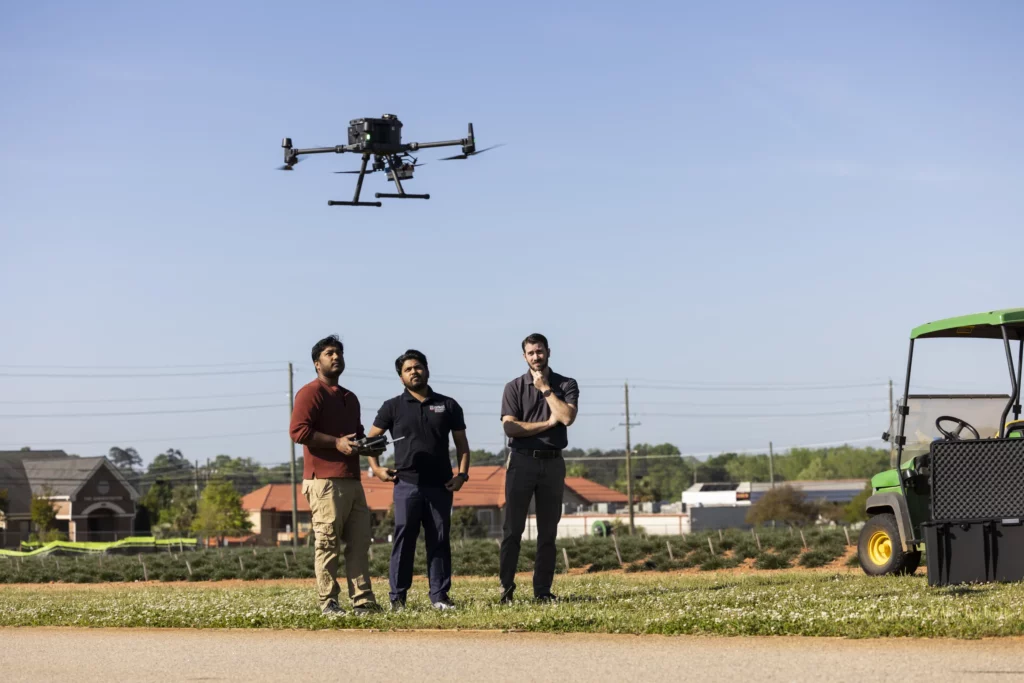
What if artificial intelligence could “see” issues with crops before they go bad?
Based at UGA’s Tifton campus and supported by the College of Agricultural and Environmental Sciences, researchers are developing autonomous machines that scan fields for pests and disease and apply treatments. Work that used to require hours of labor is now assisted by data and innovative technology like precision agriculture specialist Luan Oliveira’s mobile “Drone Dock” platform.
The platform automates refueling and reloading for large-scale operations, helping farmers reduce costs, conserve resources, and improve yields in Georgia and beyond.