“By transforming knowledge into meaningful action, our faculty, staff, and students serve the state of Georgia and help address critical challenges in our state and beyond.”
Stacy Jones — Vice President for Public Service and Outreach
From Risk to Readiness
When disaster strikes, the difference between recovery and long-term disruption often comes down to the people working behind the scenes to prepare their communities. UGA researchers are stepping into that critical space through a new partnership with Duke University and industry leaders. Together, they are launching the Center for Innovation in Risk, Catastrophes, and Decisions, an initiative designed to equip communities with better data, stronger partnerships, and clearer pathways forward.
Supported by a $1.5 million investment from the National Science Foundation, CIRCAD is developing a growing network of experts and collaborators to ensure that preparation leads the way to a safer, more secure future.
Learning Leadership
Shaping schools starts with shaping leaders.
Through a new University of Georgia initiative, the Georgia Superintendents’ Workforce Leadership Academy, education leaders across the state are coming together to strengthen their school systems. Developed by the UGA Carl Vinson Institute of Government in partnership with Georgia Power, this program helps school district leaders become catalysts for workforce development in their communities.
A Vision for the Future
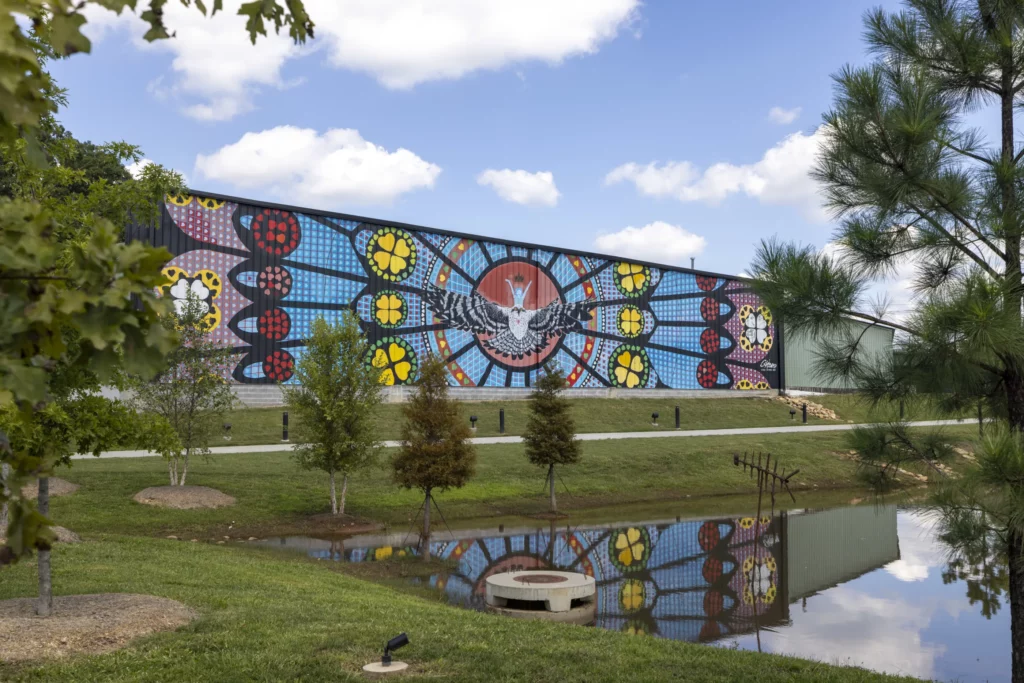
Every downtown has a story. Across Georgia, local leaders are working to write the next chapter, reimagining city centers as vibrant places to live, work, and gather.
With help from a $150,000 grant from the Truist Foundation’s Truist Charitable Fund, the Carl Vinson Institute of Government’s Renaissance Strategic Vision and Planning process supports these efforts by equipping communities with the tools, guidance, and expertise needed to turn vision into action. Working alongside local partners, UGA faculty and staff help strengthen downtown economies and empower the people who shape their communities.
Agents of Change
UGA Extension agents joined a new pilot program in Morocco to gain global knowledge in agriculture and community development. They gained a firsthand look at traditional irrigation systems, toured agribusiness facilities, and studied food production. This program offered a unique model for integrating real-world international experiences into professional development for extension agents on a mission to build community and leadership practices in Georgia.
Sustaining Agriculture
The cotton jassid is only a few millimeters long, but its toxin almost led to widespread damage to Georgia cotton plants in 2025. University of Georgia Cooperative Extension specialists spotted the cotton jassid in the summer and moved quickly from lab research to on-farm trials to develop pest control methods that kept the bug from destroying entire cotton fields across the South. They trained agents across the state for faster response times, more efficient spraying, and better yield protection against these invasive insects. Thanks to their work, Georgia cotton posted its second-highest yields on record.
Protecting the Polinators
Veterinary medicine is expanding to make room for tiny patients.
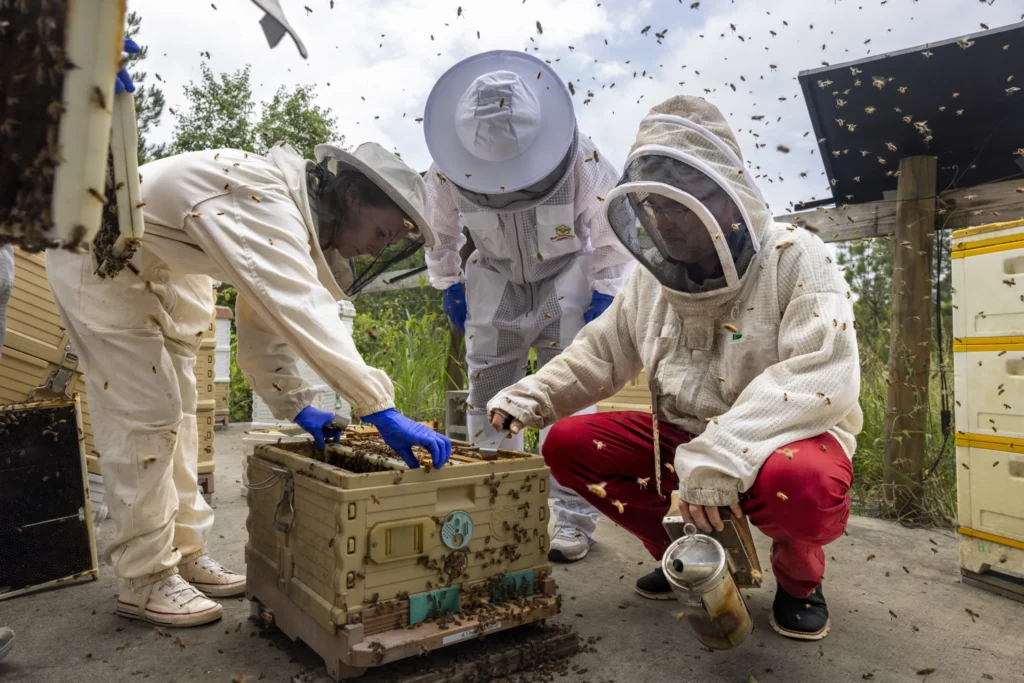
A new program funded by the USDA connects practicing veterinarians in Georgia and surrounding states with the knowledge they need to diagnose and treat honeybee diseases. Faculty in the College of Veterinary Medicine, Odum School of Ecology, and College of Agricultural and Environmental Sciences are creating a network of bee experts who will work together to stop dangerous infections that can destroy hives and snowball into catastrophic crop damage and economic losses across the state. The program will help provide beekeepers and researchers with more accessible treatments, supporting healthier bees statewide and faster control of outbreaks.
Science in the Sand
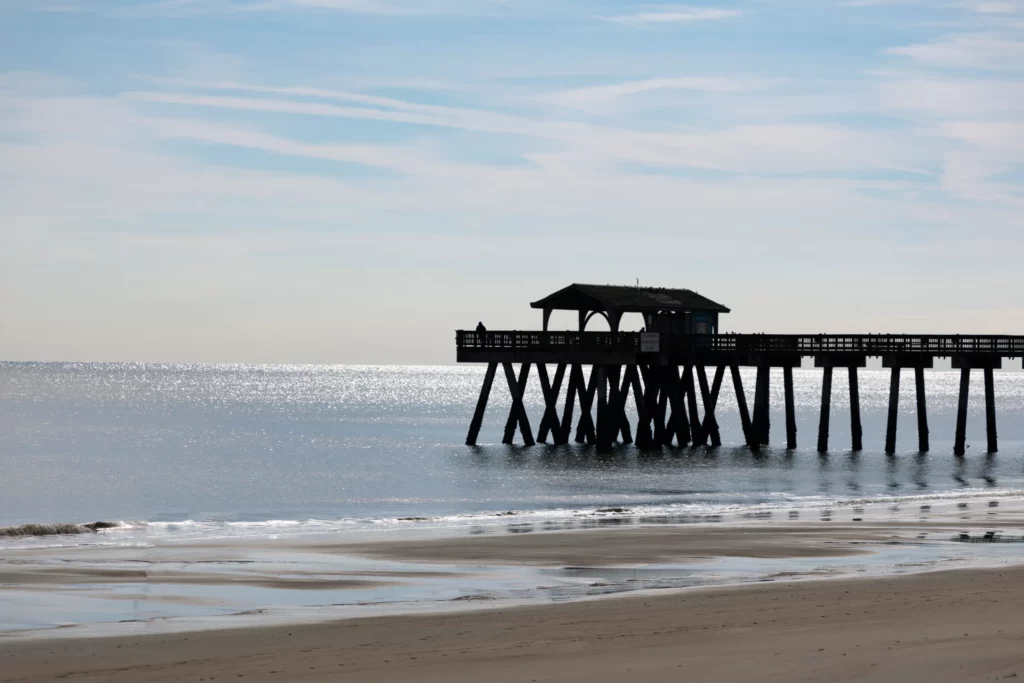
Tybee Island’s shoreline is being rebuilt grain by grain through science, engineering, and sustained collaboration. Researchers from the University of Georgia’s Skidaway Institute of Oceanography use drone technology to track how sand shifts along the beach over time to monitor the effects of erosion. They work with the City of Tybee Island and the U.S. Army Corps of Engineers to guide beach renourishment efforts that regularly replenish the shoreline and help protect nearby infrastructure and communities.
Protecting Georgia’s Coast
Georgia’s coast is being studied across generations as scientists work to understand how these fragile ecosystems change over time. The National Science Foundation has renewed a $7.5 million grant for the Georgia Coastal Ecosystems program, a long-term research effort led by the University of Georgia Marine Institute on Sapelo Island.
Established in 2000, the program brings together researchers from multiple institutions to track the forces shaping salt marshes and estuaries and to understand how these systems respond and recover. By linking decades of data with ongoing field research, the project provides critical insights into the resilience of Georgia’s coastline and informs decisions that help protect both natural habitats and coastal communities.